
Dirt Town Wiki: Machines, Money and Map Reference
Dirt Town wiki for the Early Access build: the four machines, how missions and diesel pay out, and what the first map actually contains.
Dirt Town is a first-person earthmoving sim where every bucket of sand you move stays where you put it. You start on a medium-sized mining map with a wheel loader, a hauler, a dozer and an excavator, take missions that pay per objective, and spend the money on better iron. This page is the index: what the machines do, where the money comes from, and which guide to read next. If you have not started yet, read the Dirt Town beginner guide→ first — it covers the first two hours in order.
- Four working machines at launch, plus bonus vehicles such as dirt bikes.
- Missions pay per objective, and diesel is billed against the total, so distance has a price.
- One persistent map — nothing resets, which means a bad road stays bad until you fix it.
What Dirt Town actually is
Skyturns describes the whole site as a single simulation: plow, dig and stack material anywhere, with sand, clay and gravel layered on top of each other and behaving differently. Moisture changes grip, rain carves creeks and puddles, and rocks and trees interact with both the dirt and your tyres. The developer's own Early Access note says the physics and engine are "in a very good state" and the launch map is "medium sized" — read that as a working sandbox, not a finished campaign.
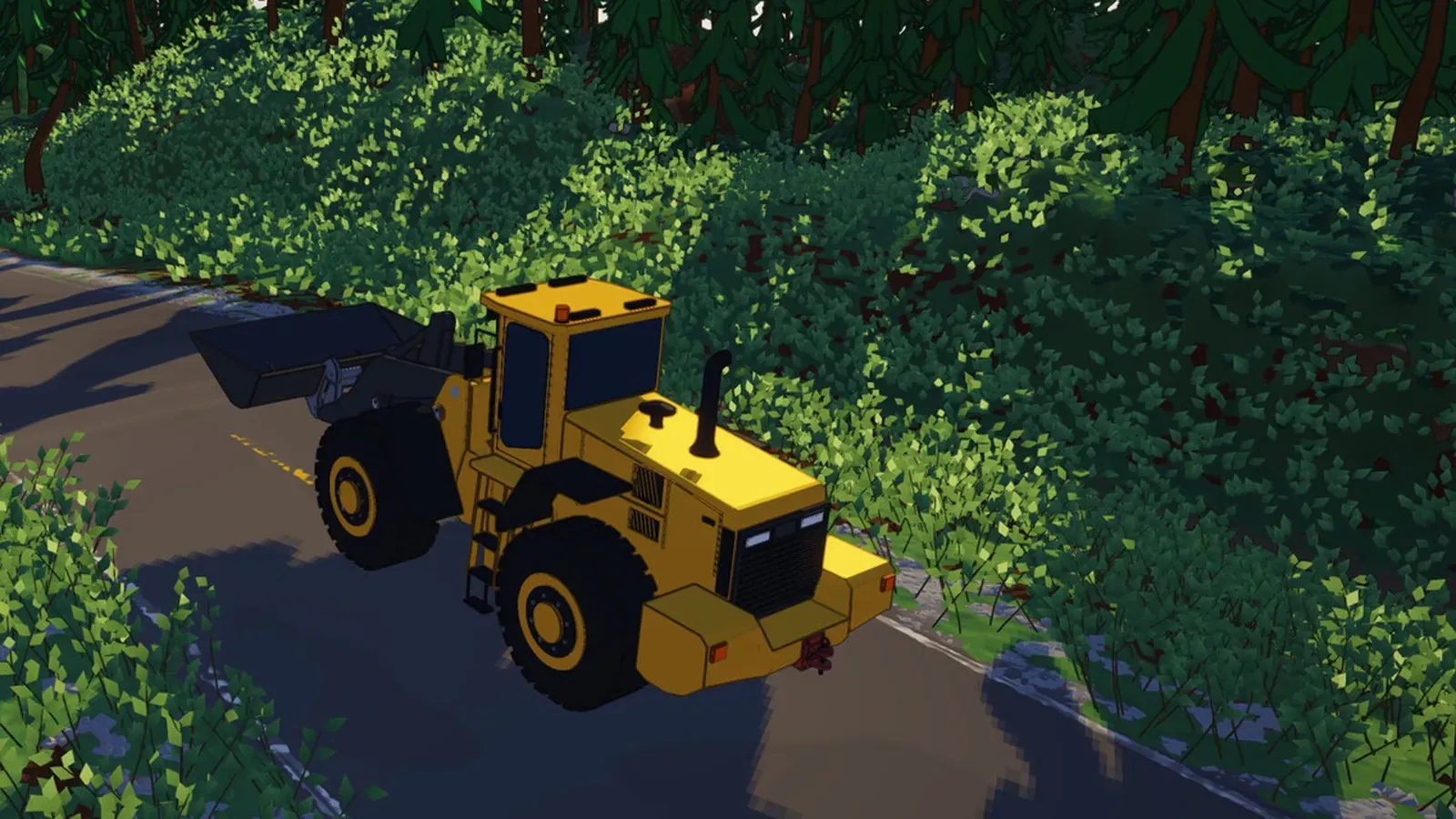
The loop is simple to state and slow to execute. You get a mission, you build the access you need to complete it, you haul material, you get paid, and the payout decides which machine you can afford next. Because the terrain persists, everything you build on the way becomes infrastructure for the next job. That is why the money guide→ and the machine pages matter more here than a story walkthrough would.
Official source: Dirt Town on Steam ↗ — store description, Early Access FAQ, system requirements.
The four machines and what each one is for
| Machine | Job on site | What it cannot do |
|---|---|---|
| Wheel loader | Fills the hauler, swaps bucket for forks, moves pallets and attachments | Cannot build a grade; poor at long hauls |
| Hauler | Moves sand, gravel and dirt at volume; tips the bed | Needs a road it can actually climb |
| Dozer | Pushes, spreads, cuts a grade; auto-level with sticks | Cannot load itself; slow over distance |
| Excavator | Digs, loads, breaks hard ground, hooks rocks | Cannot transport what it digs |
The full roster, including attachments and the bonus vehicles, is on the Dirt Town machines list→. The short version: the loader and hauler are one unit — a loader with nothing to fill is a very expensive shovel, and a hauler with no loader is a truck you fill by hand.
How money moves
Mission cards list objectives with a cash value next to each one, and a diesel line under them. In the store screenshots the sand-haul card shows a 40 t delivery objective, a 300.00 find-the-truck objective, a river jump and a boulder task, with 82.47 of diesel deducted from an earned total of 382.47. Two things follow from that layout: partial completion still pays, and long empty runs quietly eat the mission.
Resource work is the second income stream. Digging sand or gravel and shipping it out is slower per minute than a clean mission, but it does not dry up, and it scales with how good your road is. Compacted, graded routes let the hauler run faster and burn less diesel per tonne — which is why road building is an economic upgrade, not a cosmetic one.
Read the diesel line before you accept a long haul. A mission that pays 500 but bills 200 in fuel and two hours of driving is worse than three short jobs on a road you already built.
Road building in one page
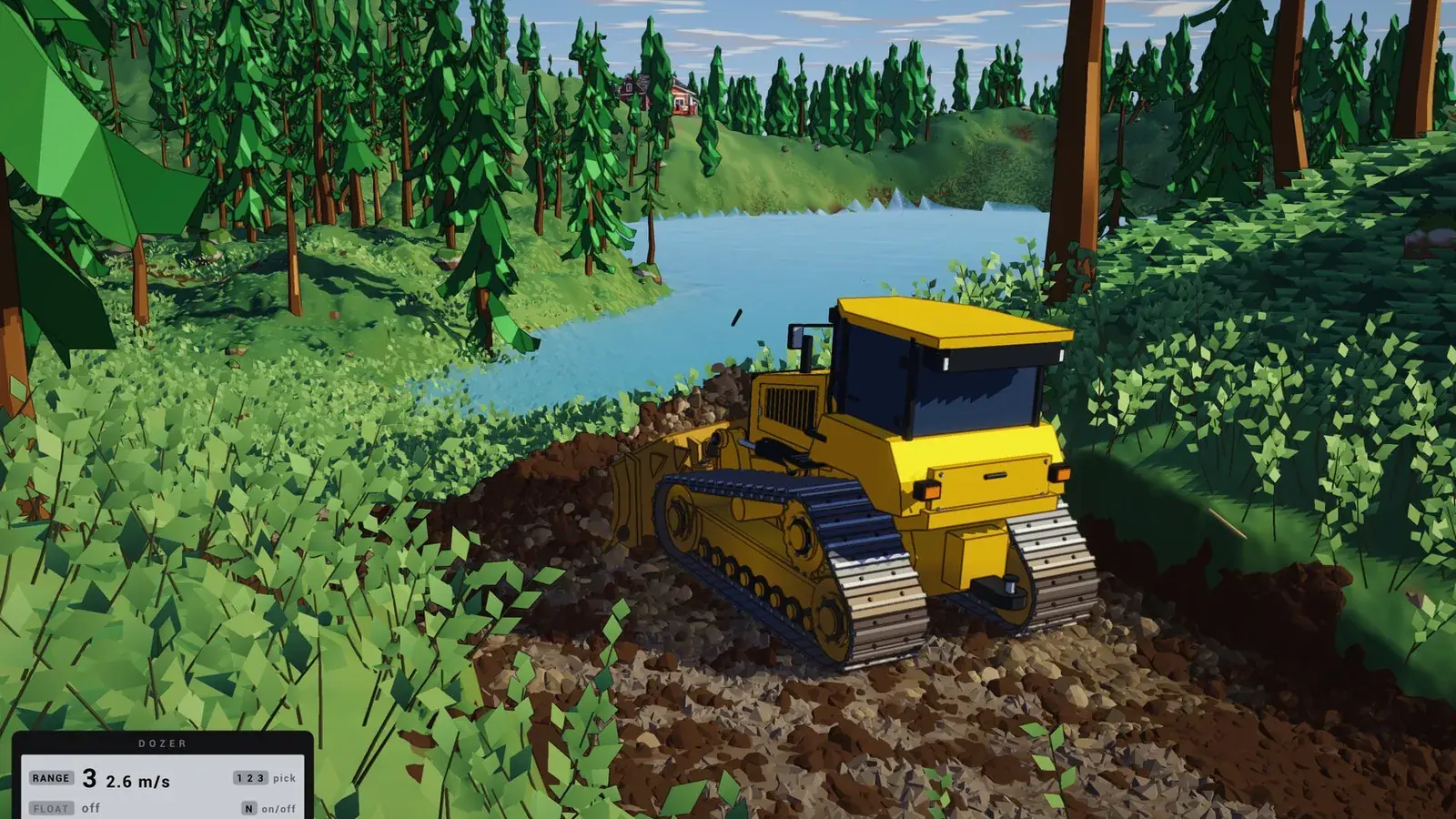
The dozer carries the grade. Set sticks for the line you want, then let auto-level hold the blade; slopes and curves are part of that system rather than something you eyeball. Spread in layers rather than one deep cut, keep the crown so water runs off, and compact before you invite the hauler onto it. Wet ground is the trap: moisture lowers grip for the machine and changes how the material moves under the blade.
The step-by-step method, including how to fix a road that has already turned to soup, is in the road building guide→. Gravel crushing and the compactor are covered in the same chain — both exist to make transport cheaper per tonne.
What the launch build does and does not have
At Early Access launch you get the mining-focused map, the four machines, side missions (a dirt bike track, a cliff jump, a swamp to drain), towing chains, and online co-op for up to four players. There are no Steam achievements yet, the price is below the eventual full release, and the developer has said the first major content drop after launch is snow.
Not in yet: extra maps, forestry as a full discipline, and mod support. The developer frames those as the direction of travel rather than dated promises, so treat any roadmap date you see outside the Steam page as speculation. The Early Access roadmap page→ separates what Skyturns has actually said from what players are hoping for.
Where to go next
If you are brand new, the beginner guide. If you are deciding what to buy, the buying order. If you are stuck on a specific machine, the cab-level guides for the dozer→, excavator→, wheel loader→ and hauler→ cover controls and technique per vehicle.
FAQ
Is Dirt Town out yet? Early Access opens on December 4, 2026. A free demo has been available since November 13, 2026 and covers a slice of the same map.
How many players can play together? Up to four, online co-op, with single-player as the default mode.
Does Dirt Town have mods? No Steam Workshop support is listed, and the store page makes no mod claims. Save files and asset formats are not documented publicly.
Is there a story or campaign? No. It is a sandbox with missions and a progression of machine purchases, not a narrative campaign.