
Dirt Town Tips: 12 Habits That Save Hours
Practical Dirt Town tips for road work and hauling: layer your cuts, crown the surface, watch the diesel line and stop fighting terrain your blade can hold.
Most Dirt Town time is lost to three things: driving a route that was never finished, loading with the wrong machine, and accepting a haul whose diesel bill eats the payout. The twelve habits below are the fixes, ordered by how much they save. They assume you already know how to get in a cab — if not, read the beginner guide→ and come back.
- Crown every road you build so water leaves instead of sitting in the wheel ruts.
- Work downhill when you cut, and push spoil to the outside of the bend.
- Check the diesel line on the mission card before you commit to a long run.
Road and grade habits
1. Cut in layers, not in one pass. A single deep blade pass over soft ground leaves an undercut face that slumps the first time it rains. Two shallow passes leave a face that holds.
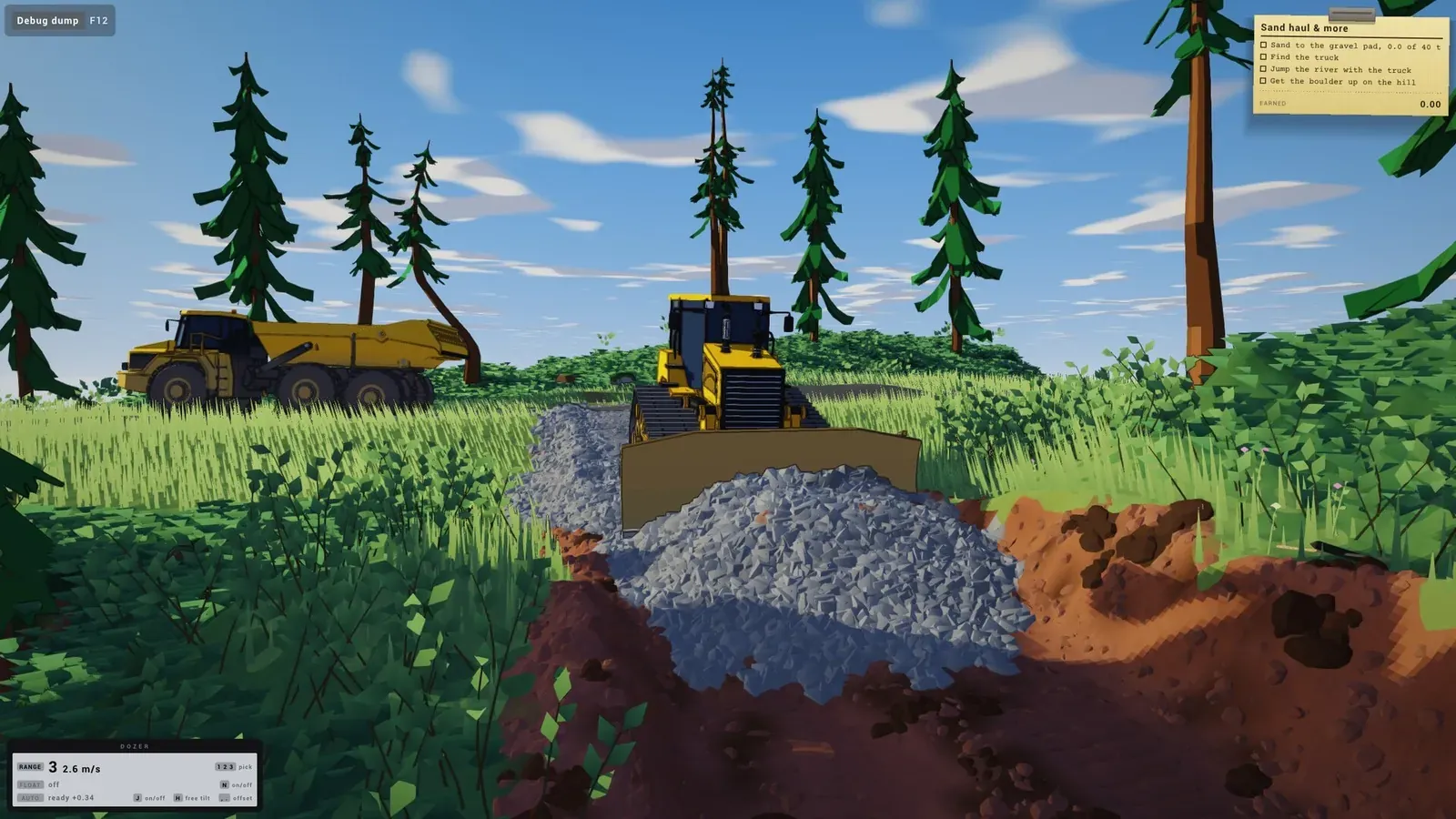
2. Crown the surface. A road with a slight centre crown sheds water to both shoulders. A flat road collects it, and a loaded hauler will find the soft spot every lap.
3. Use auto-level for the long sections. Set your sticks, let the blade hold grade, and keep manual control for corners only. Fighting the terrain by hand is how a straight road turns into a wave.
4. Build the climb first. The steepest 50 m of a route decides whether the whole route works. Cut it, compact it, test it with an empty hauler, then improve the rest.
5. Compact before the truck arrives. Loose fill sinks under a loaded hauler and the rut you create becomes the puddle you fight later. A compactor purchase pays for itself in saved recovery time.
Loading and hauling habits
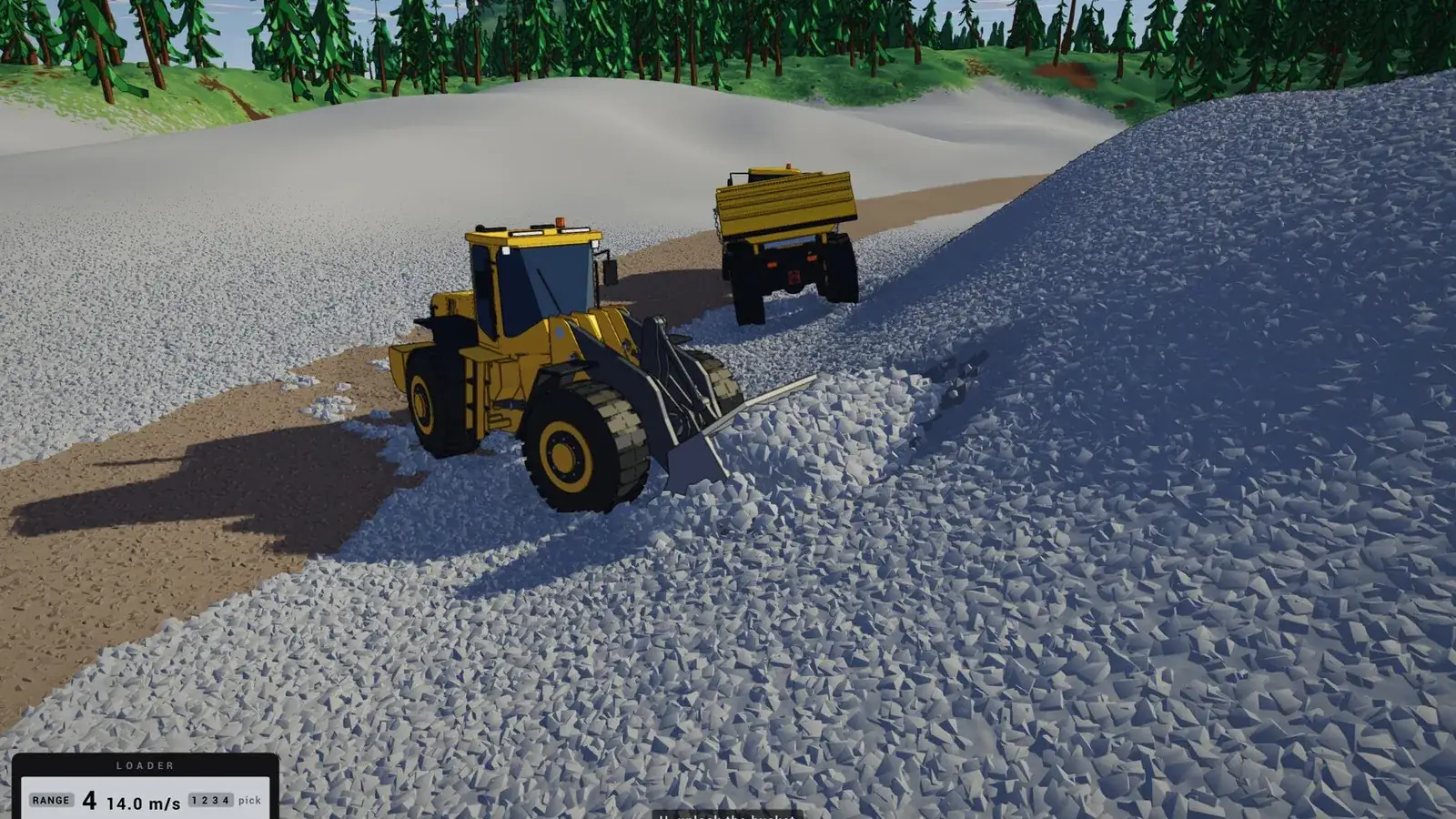
6. Load from the high side of the pile. The loader's bucket fills faster and spills less when gravity is helping, and the hauler can sit level instead of on a slope.
7. Match the truck bed to the bucket. Two or three passes and a full bed beats five passes and an overload. If the hauler is leaving half empty, you are paying for the same diesel to move less dirt.
8. Keep one machine on the pile. Loading is a queue problem. A loader parked at the source with a truck shuttling is faster than both machines driving to each other.
9. Run the shortest legal route. The route with fewer climbs beats the route with fewer metres every time. A loaded hauler on a steep grade loses more time than it saves.
Judge every route change by one number: how many seconds a full lap takes. If you cannot measure a difference, the change is cosmetic.
Money and mission habits
10. Stack missions on one road. Accept jobs that share a drop-off or a source. Two deliveries on one route cost one set of fuel and one set of time.
11. Do not leave an objective half done. Mission cards pay per objective, so finishing the cheap 300.00 task on the way past is often better than starting a new 5,000 job you cannot yet reach.
12. Treat diesel as a cost, not a detail. The card shows fuel deducted from earned money. A long empty return leg is the most common way a profitable-looking mission turns out average.
The full income model — missions versus resource shipping, and what compaction does to both — is on the money guide→. The technique behind habits 1 to 5 is in the road building guide→, section by section.
Multiplayer habits
Short sessions go wrong in co-op for one reason: everyone works without a plan. Agree a role before the first engine starts — one operator per machine, one person on the ground hooking chains and checking grade. The multiplayer page→ covers the split that actually works for four players.
Official source: Dirt Town on Steam ↗ - store description, Early Access FAQ and machine list.
FAQ
What is the most common beginner mistake in Dirt Town? Hauling on an unfinished road. The truck bogs, the run costs fuel, and the fix is always the same dozer work you skipped.
Do I need to compact a road to win a mission? No objective requires it, but uncompacted fill ruts under load and costs more time than compacting does.
Is it faster to dig with the excavator or the dozer? The dozer moves volume over short distances; the excavator digs precise, deep or hard material and loads it. Use the dozer for access and the excavator for the hole itself.
How many machines should I own early? The three you start with cover access, digging and transport. Buy a fourth only when you can name the queue it removes.