
Dirt Town Map Guide: Where Sand, Gravel and Clay Are
Read the Dirt Town launch map: the pit, the forest slopes, the bay and the swamp, what material each one gives you, and how to scout a new map fast.
The Dirt Town launch map is a single medium-sized sandbox built from real terrain data, and it is organised by material rather than by region names: a working pit with sand and gravel, forested slopes above it, a bay or water body at the low end, and wet ground that has to be drained before it can be worked. The demo shows a slice of the same world. If you want the machine side first, the wiki hub→ is the index.
- The pit is your sand and gravel source, and the fastest early money.
- The forest slopes hold the road lines and the timber.
- The bay and the wet ground are where drainage decides whether a route exists.
The pit: sand, gravel and the first missions
The stripped orange ground in the official screenshots is the working pit — the place where the material is already exposed and the haul distances are short. That is why the early missions send you there: a 40 t sand delivery from a pit is a loading and hauling lesson, not a navigation test.
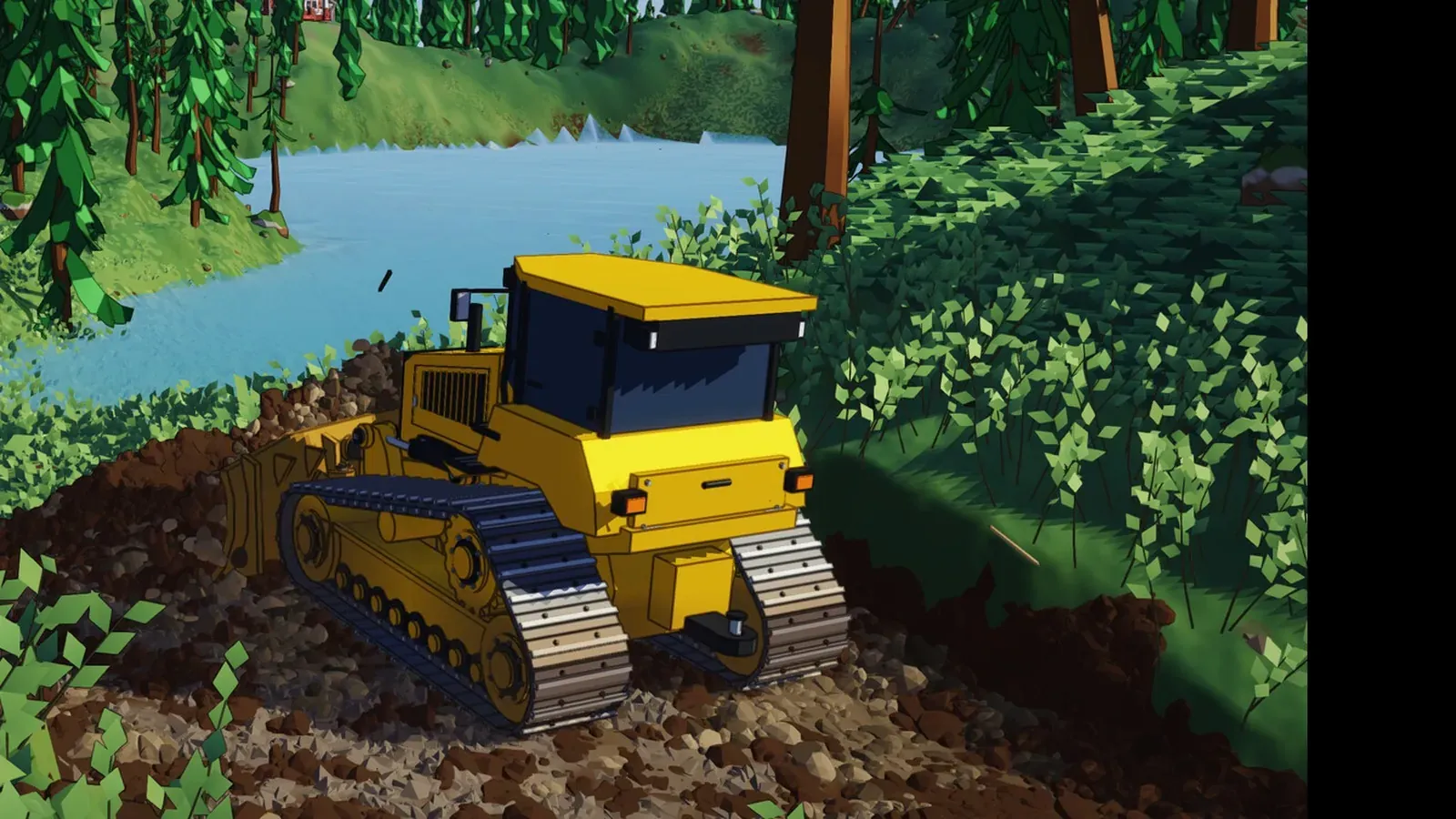
Inside the pit, look for the colour change. Sand is pale and loose, gravel is coarse and darker, clay is dense and holds a slope. The game layers them on top of each other, so the material at the surface is not always the material you want — the excavator exists partly for that reason.
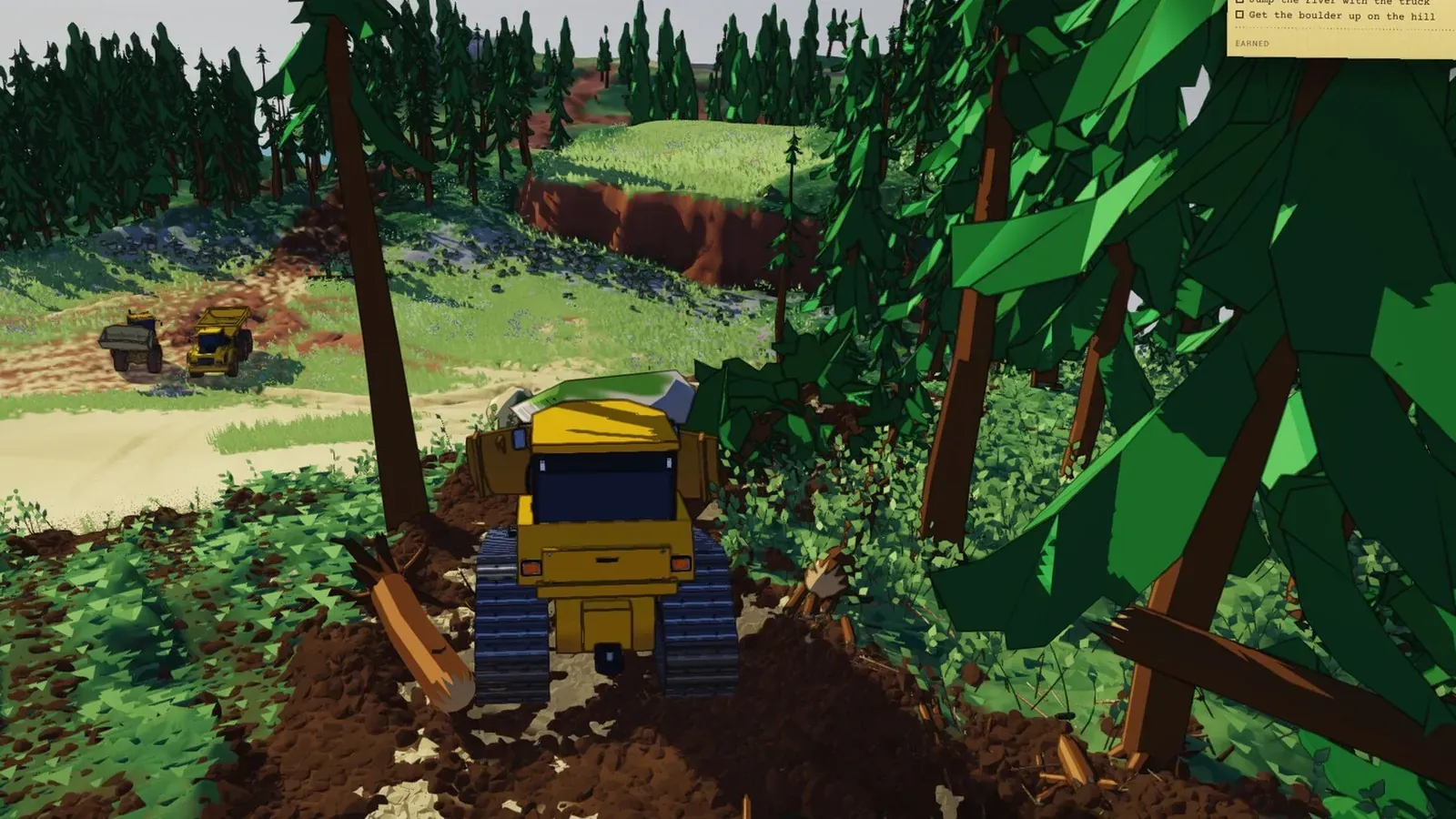
Do not build your pad at the bottom of the pit. Build it on the rim, where the ground is stable and the loaded climb is short.
The forest slopes: roads and timber
Above the pit, the terrain turns to forest and steep ground. This is where the road building happens: the climbs, the switchbacks and the treelines that have to come out before a haul route exists.
Trees are destructible and they interact with the machines, so clearing a line is part of building it. Stumps stay in the ground until they are dealt with, and a stump in the running surface is a wheel-breaker — clear them, do not drive over them.
The forest is also where the light fails first. This is the part of the map where the hauler's work light earns its place.
The bay and the wet ground
The water at the low end of the map is not just scenery. Rain creates creeks and puddles, water flows downhill, and moisture changes grip — which means the wet ground is where routes fail and where the swamp-draining side job comes from.
Two practical rules:
- Never route a loaded haul across wet ground unless it has been drained and filled. The truck will cut through the surface and sink to the axles.
- Cross drainage lines square, with a culvert or a raised fill, rather than following them downhill.
Water finds the low point of your road. If a section floods after rain, the fix is at the crown and the shoulder, not at the puddle.
Reading a new map in ten minutes
When the map changes — a new map at full release, or a fresh save — scout in this order:
- Find the exposed material. Pits, cuttings and cliffs show you what is under the surface.
- Find the low point. Water collects there, and that is where your drainage problems will be.
- Find the shortest climb between the material and the flattest ground. That is your first road.
- Find the flat ground for a pad, a screen and a turning circle.
- Check the trees on the line before you commit to it.
That order works on any map because it is about the material and the slope, not about landmarks.
What the map does not have
No fast travel, no teleport-to-mission, no minimap shortcut around the terrain. The map is the game: the distance between the material and the pad is the difficulty setting, and the road you build is the only way to change it.
That is also why the money guide→ spends so much time on lap time. On a fixed map with fixed material, time per tonne is the only variable you control.
Official source: Dirt Town on Steam ↗ - store description, Early Access FAQ and machine list.
FAQ
How big is the Dirt Town map? Skyturns describes it as a medium-sized map for mining and road building. There is one at Early Access launch.
Will there be more maps? The Early Access FAQ says more maps are coming. None are dated.
Is the demo map different? The demo shows a slice of the same world rather than a separate map.
Where should I build my first base? On flat ground near the pit rim, with room for a pad, a screening spot and a turning circle.