
Dirt Town Wheel Loader Guide: Fill a Truck in Three Passes
Load faster in Dirt Town: approach the pile in the right range, curl as you drive, keep the truck level, and stop before the machine starts to bounce.
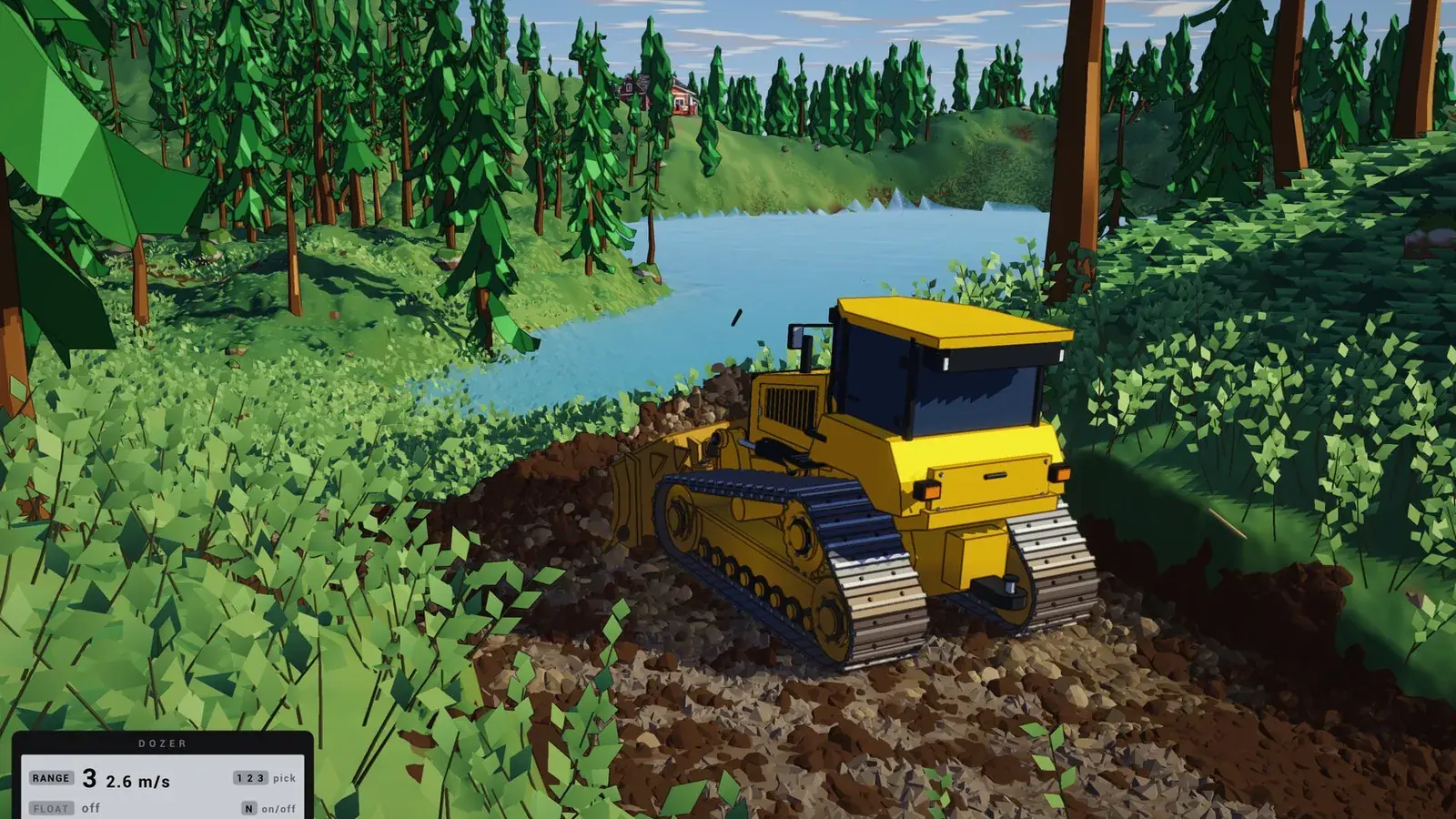
The wheel loader is the machine that sets your site's tempo. Its job is simple — fill the hauler without spilling, without spinning and without taking five passes to do what three should — and almost all of the difference is in the approach. The loader's cab shows four ranges up to 14.0 m/s, a hook toggle for attachments and a pick action for the tool you have fitted. If you are still deciding what to buy, the machines list→ tells you where the loader sits in the chain.
- Range 1 for the pile, range 4 for the empty run back.
- Curl while you drive in — a still bucket pushes material, a moving one lifts it.
- Stop before the bounce. Wheelspin is a full second lost, every pass.
The approach that fills the bucket
The failure most players repeat is charging the pile. The loader bounces, the bucket stops half full, and the truck leaves light. The fix is a slower entry with the bucket flat and low:
- Line up square to the pile in range 1.
- Drive in with the bucket flat until the material starts to resist — you will feel the machine labour before it stalls.
- Curl as the wheels are still turning, so the bucket rolls material into itself rather than pushing it away.
- Reverse out, raise, and dump over the truck bed from the high side.
The reason the high side matters: the truck can sit level, the material falls into the bed rather than against the side, and you spend less time shovelling spill at the end of the session.
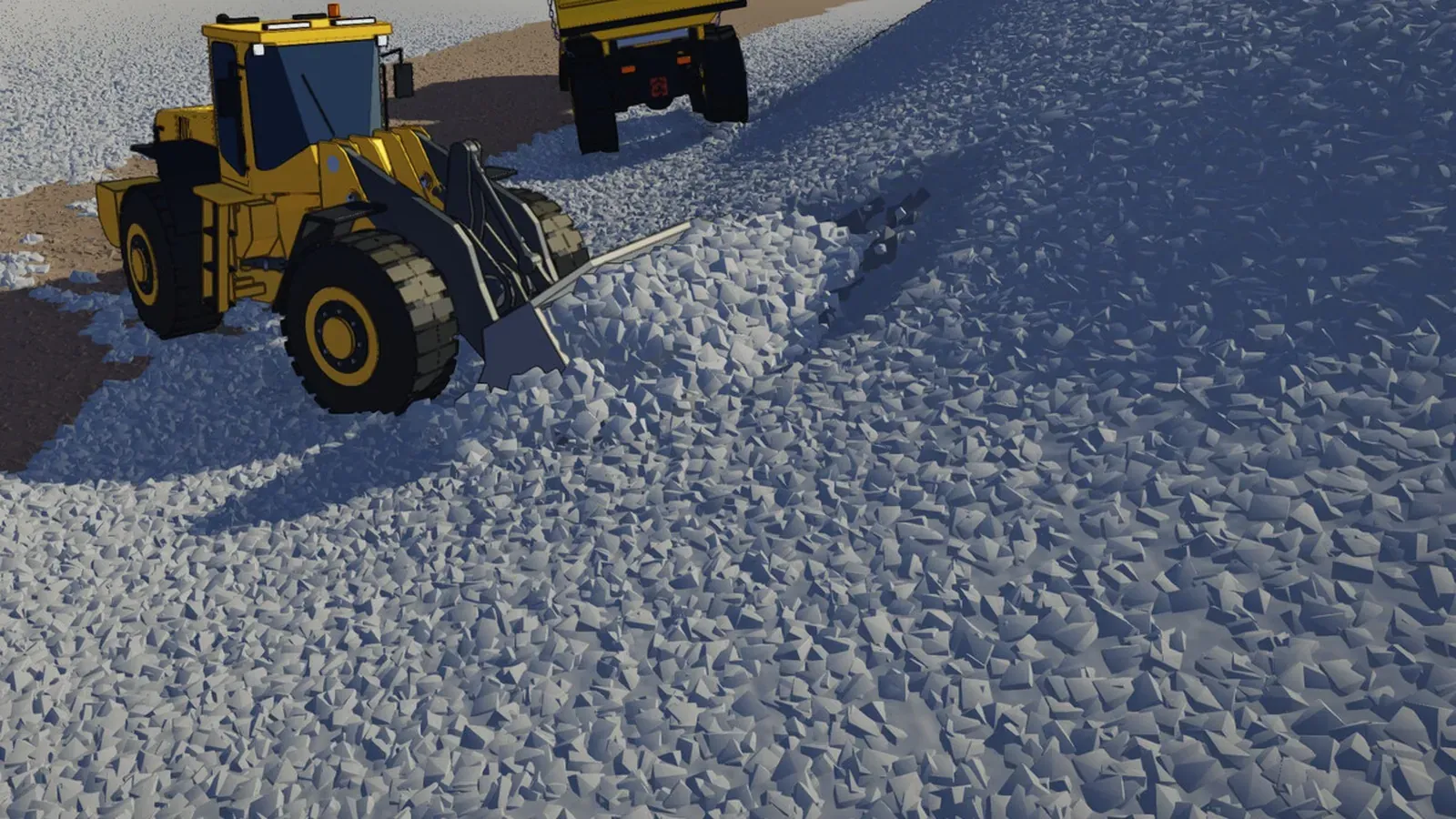
A full bucket is heavier than it looks. If the loader's nose lifts on the way to the truck, you are carrying more than the machine likes — dump a little and take the next pass.
Passes per truck
Three passes is the target for a normal bed. If you are taking five, one of these is wrong:
- The pile is too low. Work it from the high side and let the bucket fill by gravity.
- You are approaching too fast. Faster entry means more bounce and less material.
- The bucket is wrong for the material. Clay needs a different edge angle than loose sand.
Count your passes on one truck and write it down. It is the only honest measure of loader performance, and it goes straight into your money calculations→.
Attachment handling
The loader mounts tools through the hook system, and the cab has a pick action to choose between them. Two practical rules:
Hook with the arm low and the machine still. Hooking a heavy attachment while rolling is how you end up with it on the floor.
Do not swap more than you must. Every swap is a minute of not loading. If a session needs forks for pallets and a bucket for gravel, do all the pallet work first.
The attachments page→ covers the hook system in detail, including what a sifting screen is for and when forks beat a bucket.
Do not tip a truck while the loader is over the bed. The loader does not care about the hauler's raised body, but you will care when the bed comes down across your bucket.
Loader against excavator
Both can load a truck. The difference is where the material is.
A loader works a pile on the ground, at speed and with a big bucket — it is the right tool for sand, gravel and loose stockpiles. An excavator works below grade, at depth, and against rock or compacted clay; it is slower per bucket but it can reach material the loader cannot touch.
If you are standing on a stockpile with a flat pad next to it, use the loader. If the material is a face of clay at the bottom of a cut, use the excavator→.
Keeping the pad clean
The loader makes the mess and the loader clears it. Every few trucks, push the spill back into the pile with the bucket and re-level the approach. A pad that develops ruts slows every pass you make for the rest of the session.
In co-op, the loader operator owns the pad as well as the pile. If the pad is a mess, the hauler driver will start parking crooked, and crooked trucks are slower trucks.
Official source: Dirt Town on Steam ↗ - store description, Early Access FAQ and machine list.
FAQ
What range should I use to fill the bucket? Range 1. The higher ranges are for travelling empty, and using them at the pile is the main cause of wheelspin.
How many buckets fill a hauler? About three in normal material. If it takes five, check your pile height and your approach speed before blaming the machine.
Can the wheel loader dig? It can scrape and load loose material, but it cannot cut a face or work below grade — that is excavator work.
Which attachments should I buy first? A bucket is the working tool; forks are the first upgrade if you ever move pallets or attachments. Sifting screens matter once gravel becomes your main product.